Leadership and Marketing: Building Brands Through Vision
Updated: May 18
The intersection of leadership and marketing represents one of the most powerful dynamics in modern business. While marketing traditionally focuses on messaging, campaigns, and customer acquisition, effective leadership transforms these tactical elements into strategic advantages that drive sustainable growth. Today's competitive landscape demands that business leaders understand how their vision, decisions, and organizational culture directly influence marketing effectiveness and brand perception.
The Strategic Foundation of Leadership in Marketing
Leadership and marketing share a fundamental characteristic: both require the ability to inspire action and create meaningful connections. When leaders view marketing as an extension of their strategic vision rather than a separate department, they unlock opportunities for authentic brand building and market differentiation.
Marketing leadership functions best when positioned as a core business driver, not a support function. Leaders who integrate marketing into their strategic thinking create alignment between what the organization promises and what it delivers. This alignment becomes the foundation for trust, both internally among teams and externally with customers and stakeholders.
Setting Direction Through Vision
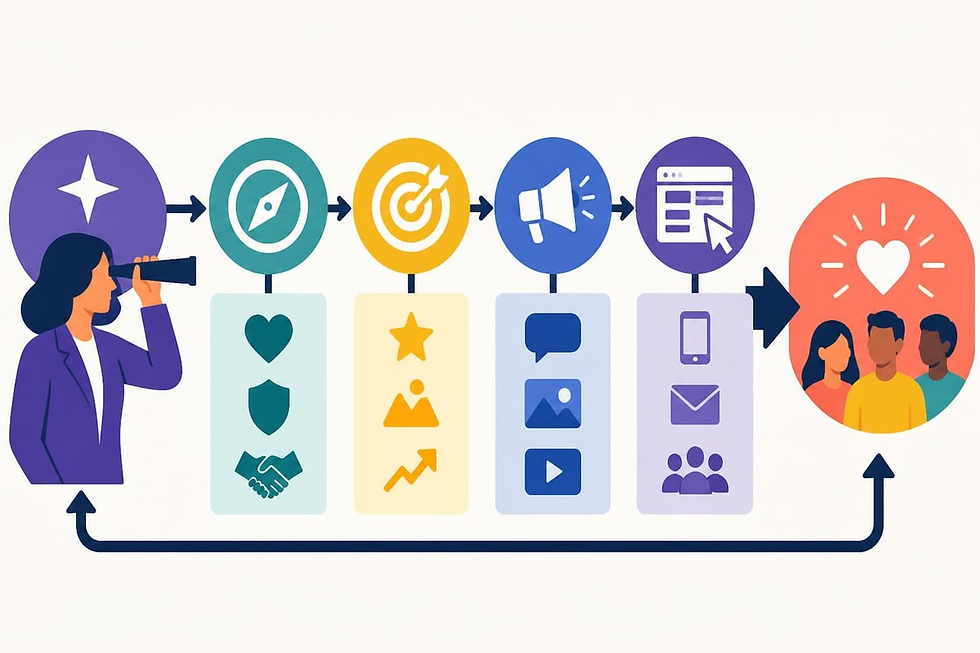
The most effective marketing strategies emerge from clear leadership vision. Leaders must articulate not just what their organization does, but why it matters and who it serves. This clarity cascades through every marketing initiative, from brand positioning to content creation.
Key elements of vision-driven marketing include:
Defining the organization's unique value proposition based on leadership insights
Establishing brand values that reflect organizational culture and leadership principles
Creating messaging frameworks that communicate strategic priorities
Aligning customer experience with leadership commitments
When leadership and marketing operate in harmony, the brand becomes a true representation of organizational identity. This authenticity resonates with audiences who increasingly seek connections with companies that demonstrate clear values and consistent leadership.
Building Marketing Leadership Capabilities
Developing leadership capabilities within marketing teams creates a multiplier effect for business growth. Marketing leaders must master both the technical aspects of their discipline and the strategic thinking required to guide organizations through complex market dynamics.
According to Forbes insights on marketing leadership, enduring principles transcend temporary trends. These include customer-centricity, data-informed decision-making, cross-functional collaboration, and continuous innovation. Marketing leaders who embody these principles create frameworks that adapt to changing conditions while maintaining strategic focus.
The Three Pillars of Marketing Leadership
Effective leadership in marketing contexts requires attention to three critical dimensions that guide strategic execution:
Direction Setting: Establishing clear objectives aligned with business goals
Pace Management: Determining the speed and sequence of initiatives
Resource Support: Providing teams with tools, training, and authority
Leadership Function | Marketing Application | Business Impact |
Vision Development | Brand Strategy | Market Differentiation |
Team Building | Cross-Functional Collaboration | Campaign Effectiveness |
Decision Making | Resource Allocation | ROI Optimization |
Communication | Messaging Consistency | Brand Trust |
These pillars work together to create an environment where marketing teams can execute with confidence while maintaining alignment with broader organizational objectives. The relationship between leadership and marketing becomes self-reinforcing when leaders invest in building these capabilities systematically.
Cultivating Trust Through Leadership Marketing
Trust forms the currency of modern marketing, and leadership plays the defining role in establishing and maintaining it. Organizations that position themselves as thought leaders and trusted advisors create competitive advantages that transcend price competition and feature comparisons.
Leadership marketing shifts focus from transactional relationships to educational partnerships. Rather than simply promoting products or services, organizations demonstrate expertise, share insights, and contribute value before asking for commitments. This approach requires leadership to embrace long-term thinking and invest in building reputation over immediate returns.
Demonstrating Industry Leadership
Companies that establish themselves as industry leaders through marketing create gravitational pull for opportunities, partnerships, and talent. This positioning requires consistent demonstration of expertise across multiple channels and formats.
Leadership marketing tactics include:
Publishing original research and thought leadership content
Speaking at industry events and contributing to professional conversations
Developing educational resources that serve target audiences
Building communities around shared challenges and opportunities
Advocating for industry advancement and positive change
For organizations navigating growth challenges, strategic marketing support can accelerate the development of leadership positioning. Understanding how marketing and business strategy interconnect enables more effective resource allocation and faster market impact.
Aligning Organizational Culture with Marketing Promise
The disconnect between what organizations promise in their marketing and what they deliver through operations creates credibility gaps that undermine growth. Leadership and marketing alignment ensures that brand promises reflect organizational reality and that internal culture supports external commitments.
Leaders shape organizational culture through their decisions, behaviors, and priorities. When these elements align with marketing messages, employees become authentic brand ambassadors who naturally communicate value propositions through their interactions. This cultural alignment transforms marketing from a department to a shared organizational competency.
Creating Cultural Foundations for Marketing Success
Marketing effectiveness depends heavily on organizational culture. Leaders who intentionally design cultures that support marketing objectives create sustainable competitive advantages. This includes fostering customer obsession, encouraging innovation, and celebrating learning from both successes and failures.
The relationship between business operations and marketing strategy demonstrates how internal excellence translates to external perception. Organizations cannot market their way past operational shortcomings, but they can leverage operational excellence as a marketing differentiator when leadership creates the right cultural conditions.
Measuring Leadership Impact on Marketing Performance
Understanding the connection between leadership decisions and marketing outcomes requires sophisticated measurement approaches. Traditional marketing metrics like conversion rates and customer acquisition costs tell part of the story, but leadership impact manifests in broader organizational capabilities and market position.
Key Performance Indicators for Leadership-Driven Marketing
Organizations should track both traditional marketing metrics and indicators of leadership effectiveness within marketing contexts. This dual focus reveals how leadership investments translate to market results.
Traditional Metrics | Leadership Metrics | Integration Points |
Conversion Rate | Team Capability Development | Campaign Innovation |
Customer Acquisition Cost | Strategic Alignment Score | Resource Efficiency |
Brand Awareness | Thought Leadership Reach | Market Authority |
Customer Lifetime Value | Cultural Health Indicators | Retention Strategies |
Revenue Growth | Cross-Functional Collaboration | Go-to-Market Speed |
Why marketing leadership matters becomes evident when examining these integrated metrics. Organizations with strong marketing leadership consistently outperform competitors across multiple dimensions, from employee engagement to customer satisfaction to financial performance.
Developing Leadership Competencies for Marketing Excellence
Marketing professionals who aspire to leadership roles must develop competencies beyond traditional marketing expertise. The modern marketing leader operates as a business strategist, team builder, and change agent who bridges multiple organizational functions.
Essential competencies for marketing leadership include:
Financial acumen to demonstrate marketing ROI and manage budgets strategically
Cross-functional collaboration skills to align marketing with sales, product, and operations
Change management capabilities to guide organizations through market transitions
Technology literacy to leverage emerging tools and platforms effectively
Communication excellence to influence stakeholders at all organizational levels
Organizations can accelerate leadership development through structured programs that combine experience, education, and mentorship. For companies requiring senior marketing expertise without full-time hiring commitments, Fractional Marketing and Leadership services provide access to experienced professionals who bring immediate strategic value.
Navigating the Evolution of Leadership and Marketing
The relationship between leadership and marketing continues evolving as technology, consumer expectations, and competitive dynamics shift. Leaders must stay attuned to these changes while maintaining focus on enduring principles that drive long-term success.
Emerging trends reshaping leadership and marketing include artificial intelligence integration, personalization at scale, community-based marketing, and purpose-driven brand building. Leaders who understand both the opportunities and risks associated with these trends position their organizations for sustainable advantage.
Balancing Innovation and Consistency
Effective leadership in marketing contexts requires balancing experimentation with consistency. While organizations must innovate to remain competitive, they also need brand stability to build recognition and trust. Leaders navigate this tension by establishing clear brand foundations while creating space for tactical innovation.
The strategic approach to marketing management emphasizes this balance. Organizations develop core positioning that remains stable while adapting tactics, channels, and messages to leverage new opportunities and respond to market conditions.
Integrating Leadership Philosophy into Marketing Operations
Marketing operations benefit tremendously when infused with clear leadership philosophy. The principles that guide organizational decision-making should manifest in how marketing teams prioritize initiatives, allocate resources, and measure success.
Leaders articulate philosophy through both formal statements and everyday actions. When marketing teams understand not just what to do but why certain approaches align with organizational values, they make better independent decisions and create more authentic communications.
Operationalizing Leadership Values
Translating leadership values into marketing operations requires intentional design of processes, systems, and decision frameworks. This operational integration ensures that values influence actual behavior rather than remaining aspirational statements.
Implementation strategies include:
Developing brand guidelines that reflect leadership values
Creating content approval processes that enforce strategic alignment
Designing campaign briefs that connect tactics to organizational vision
Establishing performance metrics that measure values alignment alongside business results
Building team rituals that reinforce cultural priorities
Organizations exploring how to delegate effectively while maintaining strategic control benefit from these structured approaches. Clear frameworks enable autonomy while ensuring alignment with leadership direction.
Building Cross-Functional Marketing Leadership
Modern marketing success requires collaboration across organizational boundaries. Marketing leaders must build relationships with sales, product development, customer success, and operations teams to create seamless customer experiences and efficient go-to-market strategies.
This cross-functional leadership demands skills beyond traditional marketing expertise. Leaders must understand different departmental priorities, speak multiple organizational languages, and broker agreements that serve collective objectives rather than departmental interests.
Creating Collaborative Marketing Ecosystems
The most effective marketing organizations function as hubs within broader business ecosystems. They gather insights from customer-facing teams, provide intelligence to product developers, enable sales effectiveness, and support customer success initiatives.
Building these ecosystems requires leadership that prioritizes relationship building, information sharing, and mutual accountability. When marketing leaders invest in cross-functional partnerships, they multiply marketing impact while strengthening overall organizational performance.
The connection between female leadership styles and collaborative approaches demonstrates how diverse leadership perspectives enrich marketing effectiveness. Different leadership approaches bring unique strengths to building the partnerships essential for modern marketing success.
Scaling Leadership and Marketing Together
As organizations grow, maintaining alignment between leadership vision and marketing execution becomes increasingly challenging. Scaling requires systematizing the connection between leadership philosophy and marketing operations while preserving the authenticity that drives brand differentiation.
Leaders must intentionally design scalable marketing systems that maintain strategic integrity as teams expand and operations become more complex. This includes documenting decision frameworks, establishing clear approval processes, and creating feedback mechanisms that keep marketing aligned with evolving business strategies.
For companies navigating growth transitions, understanding when to scale operations helps optimize resource allocation. Leadership and marketing must scale in tandem, with investments in both strategic capacity and operational capabilities.
The correlation between leadership and marketing creates organizational advantages that compound over time, building brand equity, market position, and competitive differentiation. By understanding this connection and investing in both leadership development and marketing excellence, businesses position themselves for sustainable growth in increasingly complex markets. Our Connected World Studio helps organizations strengthen this critical relationship through strategic guidance, fractional leadership support, and comprehensive marketing services designed for today's interconnected business environment.


Comments